
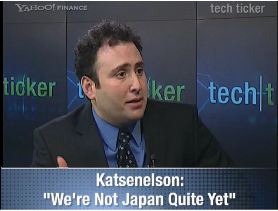
After it’s property bubble burst, Japan embarked on a stimulus program Katsenelson describes simply as: “Lower taxes and borrow money to finance it,” which pretty much sounds like U.S. fiscal policy during the Bush years.
Japan’s central bank has also employed quantitative easing repeatedly since the early 2000s; if their experience is any indication, Ben Bernanke is just getting started with the ‘QEs’.
Periodically, Japanese officials would stop stimulating, but the resulting economic pain would compel them to start again.
Walk Away, Taste the Pain
Of course, there are important differences between Japan and the U.S.
Most importantly, Japan is dealing with a “horrible demographic profile,” Katsenelson says, citing its aging population, low birth rates and limited immigration.
With its savings rate falling, Japan’s aging citizenry is reaching a tipping point where it will no longer be able to purchase Japanese Government Bonds (JGBs) at anywhere the same level as in the past 20 years, when over 90% of JGBs were purchased internally.
As a result, Japan will soon have to tap the global markets to fund its borrowing. Katsenelson predicts JGBs will get a cold reception from international buyers because of Japan’s demographics and the fact its debt is already almost 200% of GDP, or roughly double America’s. (Relatively speaking “were doing great,” he quips.)
JGBs current sport much lower yields than comparable U.S. or German government debt but Katsenelson says that won’t continue. With rates rising, Japan’s government will be forced to make the Hobson’s choice of drastically cutting services or printing yen in order to monetize the debt.
“This is a case where you go from deflation to inflation,” he says, and a warning to America to change its ways before it’s too late.
“Japan is proof that a country cannot borrow itself to prosperity,” Katsenelson writes. “The U.S. and other developed nations still have a chance to make the politically difficult but right decision to cut fiscal spending and stop looking for government to be the source of sustainable growth – which it never is.” Source: Yahoo! TechTicker










0 comments